Mastering the Art of Track Welding for Optimal Performance
Understanding Track Welding Technology
Overview of Track Welding Machines
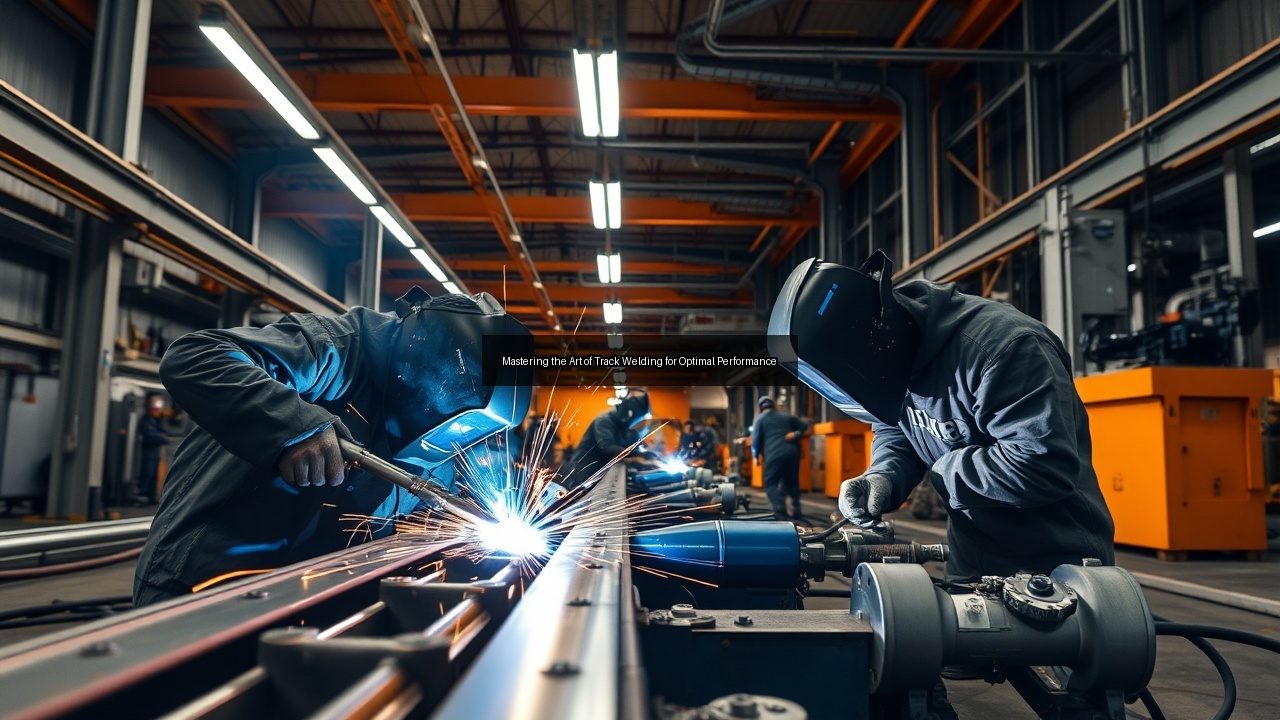
Track welding machines revolutionize the welding industry by providing precision and efficiency. These machines utilize a unique travel mechanism that allows welders to perform continuous welds on tracks or rails with minimal effort. The design of a track welder ensures that it adheres to the workpiece, maintaining a consistent distance from the joint being welded. This stability is crucial for achieving high-quality welds, particularly in applications requiring structural integrity. Track welding finds extensive use in rail construction, heavy machinery, and shipbuilding, making it a vital skill for professionals in these fields.
Key Components of a Track Welder
A track welder comprises several essential components that contribute to its overall performance. The primary elements include the welding head, which houses the electrode, and the oscillation mechanism that enables smooth movement along the track. The connecting rod connects the welding machine to the power source, ensuring a steady supply of energy required for optimal welding performance. Additionally, a quality track welding machine features a control panel, allowing welders to adjust settings such as voltage and travel speed according to specific project needs. Understanding these components is crucial for operators aiming to master track welding technology effectively.
Types of Welding Processes in Track Welding
Track welding employs several processes, each tailored to different materials and applications. Two prominent methods are gas metal arc welding (GMAW) and submerged arc welding (SAW). GMAW, also known as track welders MIG welding, is favored for its versatility and ease of use, suitable for thin materials and complex joints. On the other hand, SAW excels in high-volume production environments, delivering deep weld penetration and minimal spatter, making it ideal for heavy-duty applications. Operators must understand these processes to choose the most suitable welding technique for their specific project requirements, ensuring efficiency and quality in their work.
Choosing the Right Equipment for Track Welding
Essential Features of Track Welding Machines
Selecting the right track welding machine involves evaluating essential features that enhance performance and reliability. Look for machines that offer adjustable oscillation settings, enabling welders to fine-tune the welder's movement according to the project specifications. A robust cooling system track welders is vital for maintaining optimal temperatures, preventing overheating during prolonged use. Additionally, consider machines equipped with advanced control systems that allow for precise adjustments to voltage and feed speed. These features significantly impact the quality of the weld and the overall efficiency of the welding process, making them crucial considerations when investing in a track welding machine.
Comparing Track Welding Equipment from Gullco International
Gullco International stands out as a reputable manufacturer of track welding equipment. Their machines are known for durability and advanced technology. When comparing track welders from Gullco, consider factors such as portability, ease of use, and the specific features that align with your welding needs. For example, Gullco's KAT track welding system offers exceptional versatility, allowing for both horizontal and vertical welding applications. Additionally, their products often come with comprehensive support and service, ensuring that customers can resolve issues swiftly. Choosing Gullco equipment can enhance productivity and ensure high-quality results in track welding projects.
Selecting the Best Electrodes for Optimal Results
The choice of electrodes plays a crucial role in achieving optimal results in track welding. Different welding processes require specific types of electrodes, tailored to the materials being welded. For instance, ER70S-6 is a popular choice for mild steel applications due to its excellent arc stability and low spatter. Conversely, for stainless steel, using an electrode like ER308L ensures proper fusion and corrosion resistance. When selecting electrodes, consider factors such as the workpiece material, welding position, and desired mechanical properties of the weld. Investing in high-quality electrodes enhances the overall performance of your track welder, leading to superior weld quality.
Techniques for Effective Track Welding
Mastering Oscillation and Its Role in Welding
Oscillation is a critical technique in track welding that significantly influences the quality of the weld. By mastering oscillation, welders can achieve uniform penetration and bead appearance. Oscillation involves the side-to-side movement of the welding head, allowing for a wider weld pool and more consistent heat distribution. This technique is particularly beneficial when working with thicker materials, as it prevents burn-through and ensures a strong bond. Practicing various oscillation patterns helps welders find the best approach for different applications, ultimately enhancing the quality and strength of their welds.
Tips for Using Connecting Rods and Other Accessories
Connecting rods and other accessories enhance the functionality of track welding machines. Properly using these components contributes to a more efficient welding process. Ensure that connecting rods are securely attached and free from any wear or damage, as their integrity directly affects the machine's performance. Additionally, consider utilizing accessories like ceramic backing bars, which help control the weld pool and prevent excessive spatter. Understanding how to effectively incorporate these tools into your welding routine can lead to improved results and a smoother workflow, making the welding process more efficient and productive.
Common Mistakes to Avoid in Track Welding
Avoiding common mistakes in track welding can save time and resources while improving overall quality. One frequent error is improper machine settings, which can lead to inadequate penetration or excessive spatter. Always double-check voltage and travel speed before starting a weld. Another common mistake is neglecting maintenance; regular checks on the welding machine and accessories ensure consistent performance. Additionally, overlooking the importance of proper material preparation can lead to weak welds. Taking the time to address these issues before welding can significantly enhance the quality of your work and reduce the likelihood of costly rework.
Maximizing Efficiency and Return on Investment in Track Welding
Evaluating the Cost of Welding Machines vs. Long-Term Benefits
Investing in high-quality track welding machines often comes with a higher upfront cost, but the long-term benefits can outweigh these initial expenses. Quality machines typically offer improved efficiency, durability, and reliability, translating into lower operating costs over time. Additionally, enhanced performance leads to faster project completion, which increases overall productivity and profitability. Evaluating the total cost of ownership, including maintenance and downtime, provides a clearer picture of the potential return on investment (ROI) associated with your welding equipment. Prioritizing quality in your selection can yield significant long-term savings.
Importance of Regular Maintenance for Performance
Regular maintenance is crucial for ensuring the longevity and optimal performance of track welding machines. Scheduled inspections of key components, such as the oscillator and connecting rods, help identify potential issues before they escalate into costly repairs. Cleaning the machine and replacing worn-out parts as needed keeps the equipment operating at peak efficiency. Moreover, maintaining precise settings on the welding machine enhances the quality of the welds produced. A proactive maintenance routine not only extends the life of your equipment but also boosts productivity by minimizing unexpected downtime during critical projects.
Innovations in Track Welding Technology and Their Impact
Recent innovations in track welding technology have transformed the landscape of the welding industry. Advances in automation and robotics allow for greater precision and consistency in welding operations. Automated track welding machines can perform complex welds with minimal human intervention, significantly enhancing production rates. Furthermore, improvements in electrode technology have led to better performance and efficiency in the welding process. By staying informed about these innovations, welders can adopt the latest techniques and equipment, ensuring they remain competitive in an increasingly demanding market. Embracing these technological advancements maximizes operational efficiency and improves the overall quality of track welding projects.