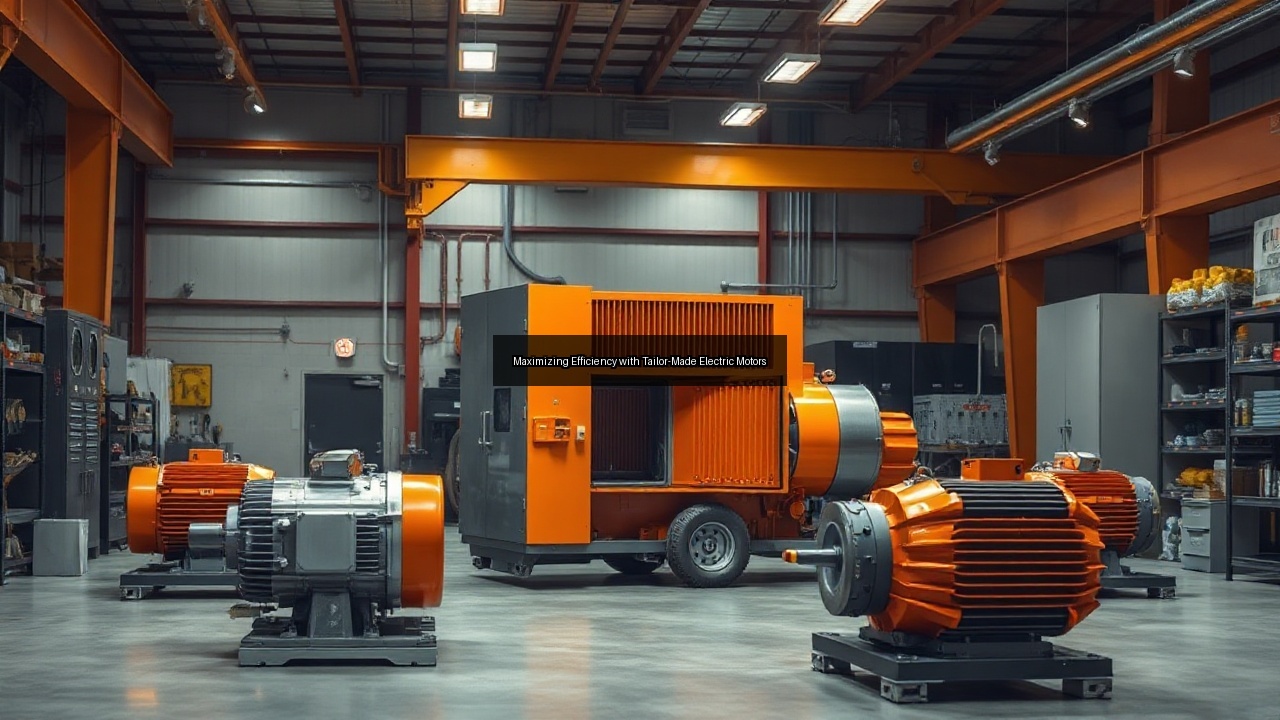
Maximizing Efficiency with Tailor-Made Electric Motors
Understanding Custom Motors and Their Applications
The Importance of Customization in Electric Motors
Customization plays a pivotal role in enhancing the performance and functionality of electric motors. Tailor-made electric motors address specific operational requirements, optimizing efficiency for various applications. Unlike off-the-shelf alternatives, custom motors are designed to meet precise parameters, ensuring compatibility with unique systems and environments. This level of customization allows engineers to create motors with tailored specifications, enhancing torque, speed, and energy consumption. Industries increasingly rely on these bespoke solutions to achieve competitive advantages, reduce downtime, and improve the overall reliability of their machinery. As organizations seek to innovate and enhance productivity, the demand for custom electric motors has surged, driving manufacturers to focus on customization as a core aspect of their offerings.
Common Types of Custom Motors: DC and AC Variants
Electric motors can be broadly categorized into direct current (DC) and alternating current (AC) variants, each offering unique advantages for different applications. DC motors, known for their simplicity and ease of speed control, are often used in robotics and precision machinery where responsiveness is crucial. Brushless DC motors, a subset of DC motors, provide higher efficiency and longer lifespan due to their lack of brushes, making them ideal for applications that demand reliability and low maintenance. On the other hand, AC motors, including synchronous motors and induction motors, excel in applications requiring consistent speed and high torque, such as in industrial machinery and large generators. Selecting the right type of motor is vital, as it directly impacts performance, energy consumption, and overall system efficiency.
Applications of Custom Motors in Various Industries
Custom motors find applications across a wide range of industries, showcasing their versatility and adaptability. In manufacturing, tailored electric motors power conveyor systems, robotic arms, and assembly lines, enhancing production efficiency. The automotive sector utilizes custom motors in electric vehicles and hybrid systems, optimizing energy use and performance. In the renewable energy domain, custom generators powered by electric motors contribute to wind and solar energy systems, promoting sustainability. Moreover, the healthcare industry employs specialized electric motors in medical devices, ensuring precision in critical applications. The increasing trend toward automation and smart technology further drives the need for customized solutions, allowing businesses to meet specific operational challenges head-on.
Designing Tailor-Made Electric Motors for Efficiency
Precision Engineering in Custom Motor Design
Precision engineering stands at the forefront of designing custom electric motors. Engineers leverage advanced modeling techniques and simulations to create motors that meet exact specifications, ensuring optimal performance. The design process involves careful consideration of materials, dimensions, and configurations to minimize energy losses and maximize torque output. By employing finite element analysis and computational fluid dynamics, designers can predict how motors will behave under various conditions, allowing for adjustments before manufacturing begins. This level of precision not only enhances efficiency but also prolongs the lifespan of the motor, reducing the need for frequent replacements. As industries continue to seek efficiency and reliability, the role of precision engineering in custom motor design becomes increasingly critical.
Choosing Between Brushless DC and Induction Motors
The choice between brushless DC motors and induction motors significantly impacts performance and efficiency. Brushless DC motors offer advantages in applications requiring high responsiveness and precise control, making them suitable for robotics and aerospace applications. Their ability to deliver high torque at low speeds and maintain efficiency across a wide range of operating conditions makes them a popular choice among engineers. In contrast, induction motors are widely used in industrial settings due to their robustness and simplicity. They typically require less maintenance and have a longer operational life, making them ideal for heavy-duty applications. The decision ultimately hinges on the specific needs of the project, including factors like cost, efficiency, and operational requirements.
The Role of Gear Configurations in Motor Performance
Gear configurations play a crucial role in the performance of electric motors, influencing torque output and speed. By selecting the right gear ratio, engineers can optimize how a motor delivers power to a load. For instance, a higher gear ratio increases torque but reduces speed, while a lower gear ratio enhances speed but decreases torque. Custom motors often incorporate unique gear configurations tailored to specific applications, ensuring that the motor operates efficiently within its intended operational range. Proper gear alignment and configuration contribute not only to performance but also to the longevity of the motor. Understanding the interplay between gear ratios and motor characteristics allows designers to create systems that maximize efficiency while meeting the demands of various applications.
Manufacturing and Inventory Management for Custom Motors
Streamlining Production Processes for Custom Electric Motors
Streamlining production processes for custom electric motors involves optimizing every stage of manufacturing. Manufacturers employ lean manufacturing principles to eliminate waste and improve efficiency. This approach focuses on reducing production times, minimizing material waste, and enhancing quality control. By implementing automation and advanced manufacturing techniques, companies can produce custom motors more quickly and with greater precision. Additionally, the integration of real-time data analytics allows manufacturers to monitor production processes continuously, identifying bottlenecks and areas for improvement. The ability to respond swiftly to changing market demands ensures that manufacturers can meet customer expectations while maintaining high standards of quality.
Inventory Considerations for Custom Motors: Balancing Demand and Supply
Effective inventory management for custom motors requires careful balancing of demand and supply. Manufacturers must anticipate market trends and customer needs to ensure they have the right components available when required. This often involves maintaining a flexible inventory that can adapt to varying demand levels. Techniques such as just-in-time inventory and demand forecasting help streamline operations, reducing excess stock and minimizing holding costs. Collaboration with suppliers also plays a vital role in securing the necessary components for customization. By fostering strong relationships with suppliers, manufacturers can ensure timely access to quality materials, enhancing their ability to deliver custom electric motors efficiently.
Future Trends in Custom Electric Motors
Advancements in Technology for Customized Motors
Technological advancements continue to reshape the landscape of custom electric motors. Innovations in materials, such as lightweight composites and advanced magnet technologies, enhance performance while reducing energy consumption. The integration of artificial intelligence and machine learning in motor design allows for smarter customization processes, enabling engineers to predict performance outcomes with greater accuracy. Additionally, the rise of the Internet of Things (IoT) facilitates real-time monitoring of motor performance, allowing for predictive maintenance and minimizing downtime. These advancements not only improve the efficiency of custom motors but also drive the development of more sustainable and environmentally friendly solutions.
The Growing Demand for Efficient Electric Motors in Trucks and Generators
The demand for efficient electric motors in trucks and generators is on the rise. As the transportation industry shifts toward electrification, custom motors play a key role in enhancing the efficiency of electric and hybrid trucks. These motors help optimize energy use, extend battery life, and increase overall performance. Similarly, in the generator sector, efficient electric motors ensure that power generation systems operate reliably and sustainably. The focus on reducing carbon footprints has led to increased investments in research and development, driving innovation in custom motor technology. As industries prioritize efficiency and sustainability, the future of custom electric motors appears bright, with endless possibilities for innovation and growth.